Mastering the Metal Fabrication Process from Design to Execution
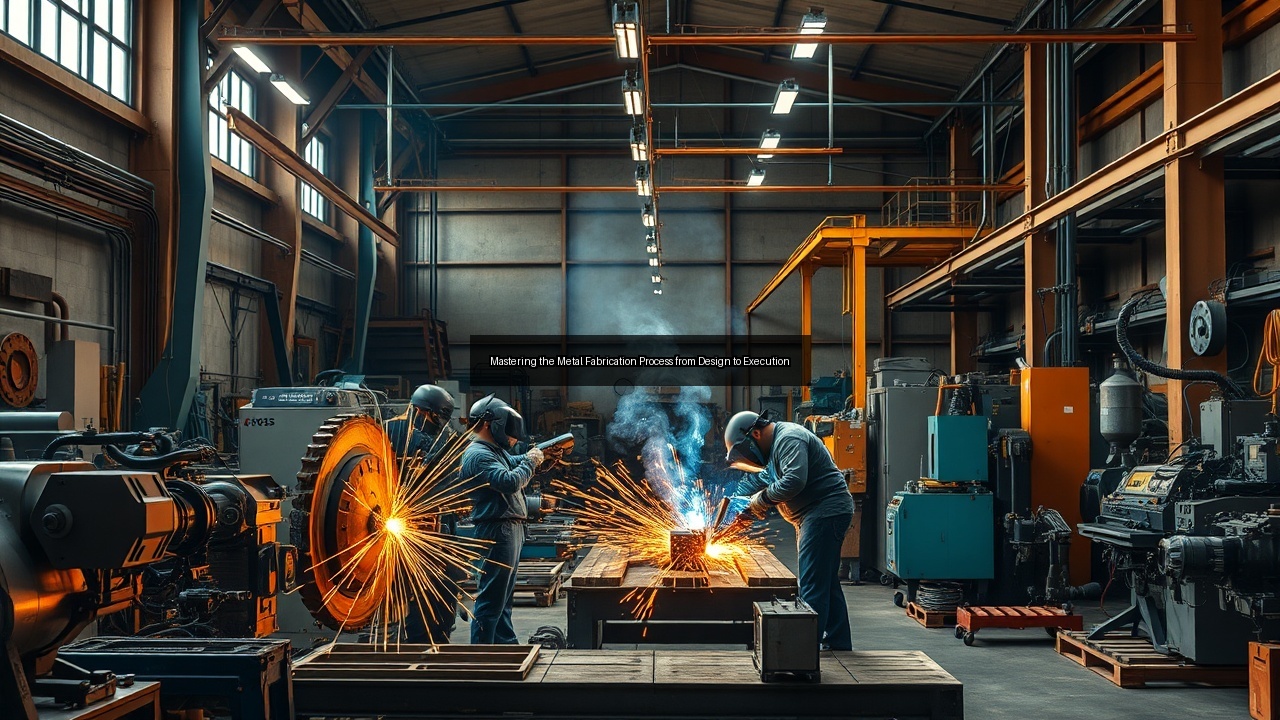
Understanding the Metal Fabrication Process
Overview of Metal Fabrication
Metal fabrication transforms raw metals into finished components through cutting, bending, and assembly. The metal fabrication process starts with precise planning and ends with durable products that support infrastructure and manufacturing needs. Professionals rely on welding and fabrication to join sections securely while maintaining structural integrity. This workflow incorporates tools like saws and presses alongside advanced machinery to handle alloys efficiently. Companies that specialize in custom welding and fabrication deliver tailored solutions for industries ranging from construction to aerospace.
Each step demands expertise to balance weight, cost, and performance. Welding and fabrication services integrate design specifications with practical execution, ensuring parts meet exact tolerances. Fabrication companies often combine traditional techniques with modern technology to streamline production and reduce waste.
Key Metals Used in Fabrication
Steel, aluminum, and various alloys form the backbone of most projects. Aluminum offers low weight and corrosion resistance, making it ideal for aerospace and transportation applications. Steel provides strength for infrastructure and heavy machinery. Fabrication and welding teams select metals based on mechanical properties, weldability, and environmental demands. Expertise in handling these materials prevents defects during the metal fabrication process.
Alloys enhance performance in high-stress environments. Welders adjust parameters for each metal type to achieve strong bonds. Fabrication companies stock diverse metals to support rapid turnaround on custom welding and fabrication orders. Proper material selection directly influences final product durability and lifecycle costs.
Importance of Design in Fabrication
Design drives every decision in the metal fabrication process. Engineers create detailed blueprints that guide cutting, forming, and welding sequences. Accurate design minimizes material waste and prevents costly rework. Welding and fabrication professionals review designs for feasibility before production begins. This stage incorporates engineering principles to optimize strength while controlling weight and cost.
Effective design also accounts for downstream processes like machining and inspection. Teams use software to simulate weld joints and stress points. Fabrication and welding services thrive when design teams collaborate closely with welders and machinists. Clear specifications lead to smoother workflows and higher-quality outcomes across custom welding and fabrication projects.
Welding Techniques in Fabrication
Introduction to Welding Methods
Welding joins metals permanently through heat and sometimes pressure. Common methods include MIG, TIG, and SMAW, each suited to specific conditions. Welding and fabrication experts choose techniques based on metal thickness, joint type, and required strength. Brazing serves as an alternative for delicate assemblies where high heat could damage components. Mastery of multiple processes allows fabrication companies to handle varied client requirements efficiently.
Understanding weld metallurgy helps prevent cracks and porosity. Welders apply proper preheat and filler materials to maintain integrity. Fabrication and welding services emphasize safety protocols and consistent technique to produce reliable results every time.
MIG Welding: Advantages and Applications
MIG welding, also called GMAW, feeds continuous wire electrode through a gun while shielding gas protects the weld pool. This method offers high deposition rates and works well on aluminum and steel. Fabrication teams favor MIG for its speed on production runs. MIG welding suits automotive frames, structural beams, and machinery housings where consistent beads matter. Automation enhances repeatability in large-scale metal fabrication.
Operators adjust voltage and wire speed to match material thickness. MIG reduces spatter when parameters are optimized, lowering cleanup time. Welding and fabrication shops rely on this process for cost-effective joining across diverse alloys. Proper training ensures strong, clean welds that meet engineering specifications.
TIG Welding: Precision and Quality
TIG welding, or GTAW, uses a non-consumable tungsten electrode and separate filler rod for exceptional control. This technique excels on thin aluminum sections and critical aerospace components. Welders achieve clean, aesthetically pleasing joints with minimal distortion. TIG demands steady hands and precise amperage settings to produce high-integrity welds. Fabrication companies reserve TIG for applications requiring superior appearance and strength.
Shielding gas prevents oxidation during the process. TIG welding integrates smoothly into custom welding and fabrication workflows where quality cannot be compromised. Skilled welders often combine TIG with other methods to optimize both speed and finish on complex assemblies.
SMAW: Versatility in Various Environments
SMAW, or stick welding, uses a flux-coated electrode that creates its own shielding. This process performs reliably outdoors and on rusty or painted surfaces. Construction crews and field welders depend on SMAW for infrastructure repairs and pipeline work. Fabrication and welding teams value its portability and low equipment cost. SMAW handles thick sections effectively when proper technique is applied.
Electrode selection matches base metal composition and position. While slower than MIG, SMAW provides flexibility in remote locations. Welding and fabrication services maintain SMAW capability for jobs where other processes face limitations. Consistent practice yields dependable results across challenging conditions.
Machinery and Tools for Metal Fabrication
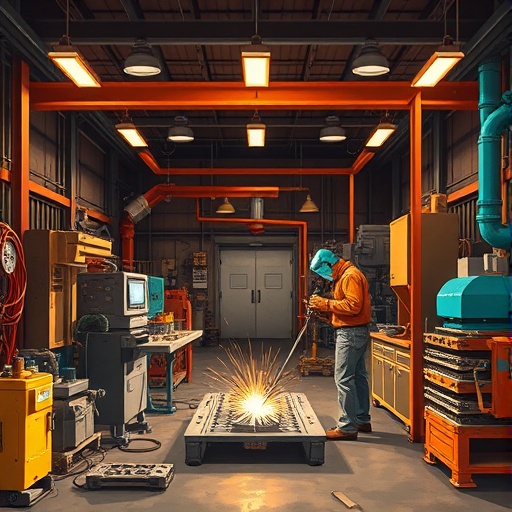
Essential Tools for Fabrication
Core tools include saws, grinders, brakes, and shears that prepare metal stock for assembly. A reliable saw delivers accurate cuts that reduce machining time later. Welders use clamps and positioners to hold parts during welding. Fabrication shops invest in quality tools to maintain precision throughout the metal fabrication process. These instruments support both manual and automated workflows.
Handheld plasma cutters and magnetic drills increase versatility on job sites. Proper tool maintenance prevents downtime and ensures safety. Welding and fabrication experts train staff thoroughly on each piece of equipment to maximize productivity.
Automation in Metal Fabrication
Automation streamlines repetitive tasks and improves consistency across batches. Robotic arms perform welding operations while operators monitor parameters. Automated systems handle material handling and inspection, freeing skilled welders for complex work. Fabrication companies adopt automation to meet tight deadlines without sacrificing quality. This technology integrates with existing machinery to create efficient production lines.
Sensors detect deviations in real time, allowing immediate corrections. Automated welding cells reduce human exposure to fumes and sparks. Welding and fabrication services that embrace automation gain competitive advantages in cost and throughput for large contracts.
Role of CNC Machines in Modern Fabrication
CNC machines execute programmed instructions to cut, drill, and bend metal with extreme accuracy. These systems handle intricate designs that manual methods cannot replicate consistently. CNC integration shortens lead times in the metal fabrication process. Operators load programs and raw stock, then oversee multiple machines simultaneously. Fabrication shops rely on CNC for repeatable results in high-volume manufacturing.
Software updates allow quick adaptation to new part geometries. CNC technology pairs effectively with welding stations to create seamless workflows. Welding and fabrication teams that master CNC programming deliver superior precision and reduced scrap rates on custom projects.
Quality Control and Inspection in Fabrication
Importance of Quality Control in Fabrication
Quality control verifies that every weld and cut meets design specifications. Systematic checks catch defects before they reach final assembly. Fabrication companies implement checkpoints throughout the metal fabrication process to maintain standards. This discipline protects structural integrity and customer satisfaction. Welders document parameters to support traceability and continuous improvement.
Regular audits identify training needs and equipment issues early. Strong quality control reduces warranty claims and builds reputation. Welding and fabrication services that prioritize inspection deliver reliable products across industries.
ISO 9001 Standards and Compliance
ISO 9001 certification establishes rigorous quality management systems. Fabrication companies follow documented procedures for design review, process control, and corrective action. Compliance demonstrates commitment to consistent output and customer requirements. Auditors verify that welding and fabrication operations meet international benchmarks. Certification opens doors to aerospace and defense contracts that demand proven systems.
Teams maintain records of inspections and welder qualifications. ISO 9001 drives ongoing refinement of the metal fabrication process. Companies invest in training and equipment upgrades to sustain compliance and competitive edge.
Inspection Techniques for Metal Fabrication
Visual examination, ultrasonic testing, and radiographic inspection detect surface and internal flaws. Dye penetrant reveals cracks invisible to the naked eye. Fabrication teams apply these methods at key stages to confirm weld quality. Advanced machines provide digital records for compliance documentation. Inspection supports both production welding and custom fabrication projects.
Qualified inspectors interpret results and recommend repairs when needed. Thorough inspection prevents failures in service and protects infrastructure investments. Welding and fabrication professionals integrate inspection directly into workflows for maximum efficiency.
The Future of Welding and Fabrication
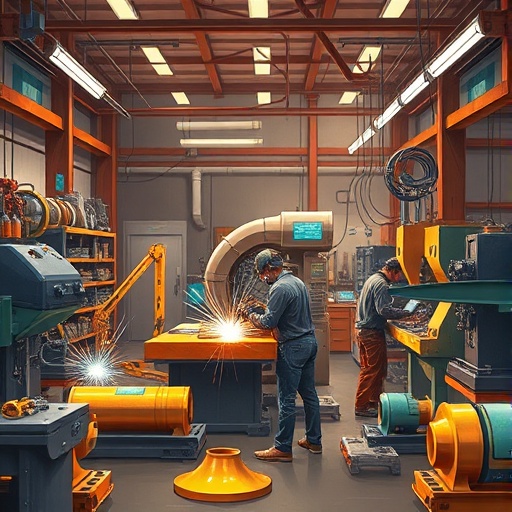
Emerging Technologies in Fabrication
Laser welding and additive manufacturing expand capabilities beyond traditional limits. These technologies enable complex geometries and faster production cycles. Fabrication companies explore hybrid systems that combine machining and welding in single setups. Artificial intelligence assists weld parameter selection and defect prediction. Welding and fabrication services adopt these advances to stay ahead of evolving industry demands.
Digital twins simulate entire fabrication processes before metal is cut. Training simulators prepare welders for new techniques safely. Technology continues to reshape how fabrication companies approach design and execution.
Sustainability in Metal Manufacturing
Energy-efficient machines and recycled metals reduce environmental impact. Fabrication teams optimize workflows to minimize scrap and energy consumption. Sustainable practices lower costs while meeting regulatory expectations. Welding and fabrication services increasingly track carbon footprints across projects. Closed-loop systems recycle cutting fluids and metal waste effectively.
Designers specify lighter alloys that require less energy to transport and install. Sustainability initiatives drive innovation in both equipment and processes. Fabrication companies that lead in green manufacturing attract environmentally conscious clients.
Trends in Custom Welding and Fabrication Services
Demand grows for on-demand, small-batch production with rapid turnaround. Fabrication companies offer integrated engineering support from initial concept through final delivery. Mobile welding units bring capabilities directly to client sites for infrastructure maintenance. Welding and fabrication services emphasize specialization in high-performance alloys and exotic materials. Digital platforms connect customers with qualified welders and streamline quoting.
Customization extends to surface finishes and coatings that enhance durability. Trends favor flexible shops that combine traditional expertise with automated cells. These developments position welding and fabrication as essential partners in modern manufacturing and construction.
See Also
- How Quality Control Shapes the Success of Fabrication and Welding Projects
- The Role of Automation in Transforming Welding and Fabrication Processes
- Exploring the Future of Welding Technologies and Their Impact on Industry
- Advancements in Aerospace Welding and Fabrication Technologies
- Innovative Techniques in Welding and Fabrication for Modern Manufacturing